




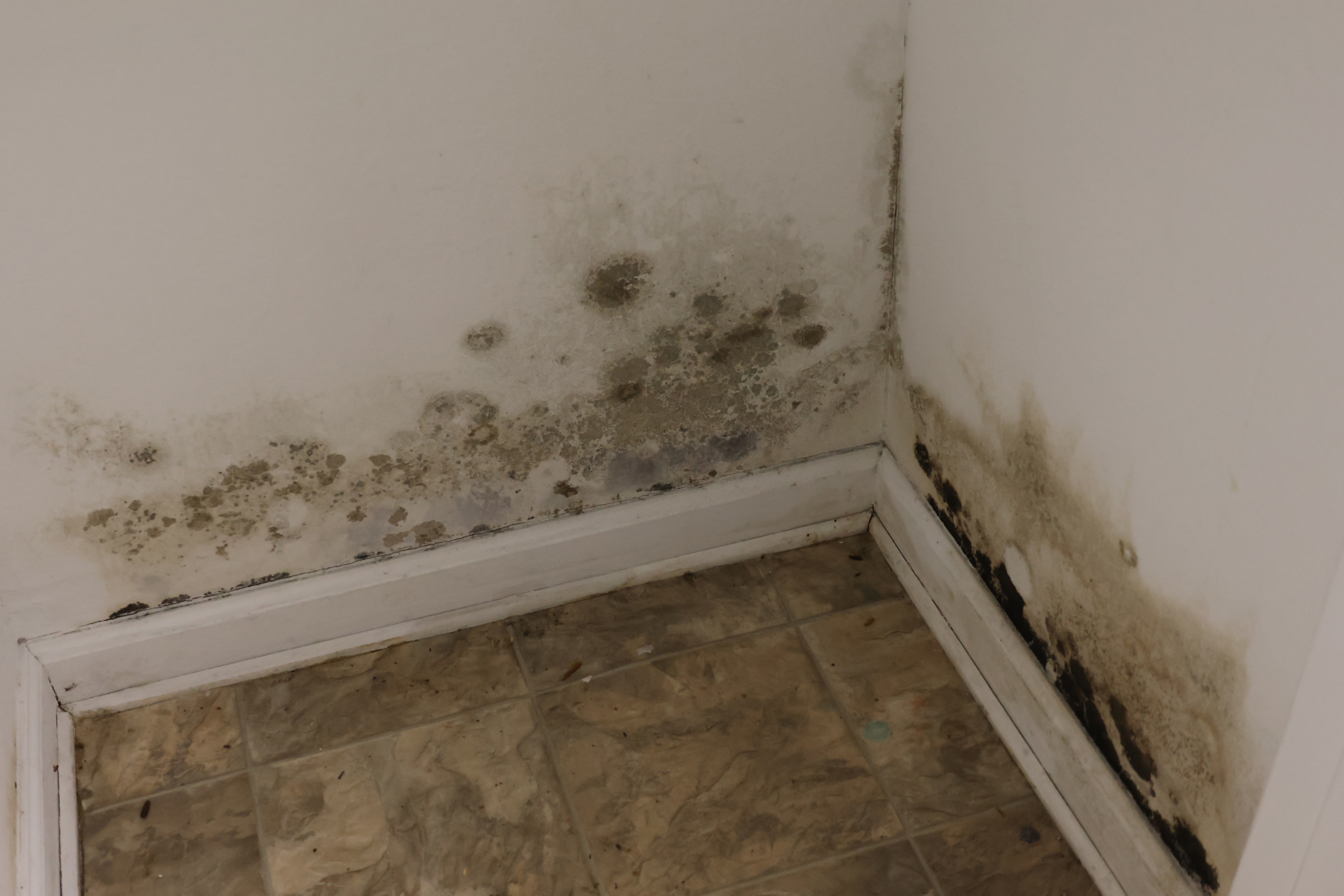
TALLAHASSEE, Fla. — After returning from an internship, Florida A&M University student Danae Daniels found mold throughout her off-campus apartment — on her bed, in her closet, in her bathroom, “literally everywhere.” Storms in summer 2024 had caused billions of dollars in damage across the Tallahassee area while she was away, and the moisture left behind had quietly turned the natural disaster into a public-health crisis.
“If any part of a home is exposed to flooding or leaks and is not fully dried within 24 to 48 hours, mold growth is almost certain,” said Parham Azimi, a research associate at Harvard T.H. Chan School of Public Health. “After major storms, we often see spikes in respiratory illnesses, particularly in homes that were affected by flooding.”
An estimated 47% of residential buildings in the United States contain mold or dampness, and 29% of the nation’s population — some 95 million people — live in flood-prone coastal counties. Health consequences range from mild allergic reactions and asthma flare-ups to hypersensitivity pneumonitis and mycotoxin-related illnesses that can cause neurological damage, liver disease, and kidney dysfunction. Mold remediation typically costs $1,223 to $3,751 according to Angi, but severe cases can reach $30,000 or more, leaving low-income families especially vulnerable.
One Houston mother quoted in the article, Lauren Lowenstein, discovered toxic mold in her home’s HVAC system only after five years of declining family health — despite no visible signs. Published November 19, 2025 by KFF Health News, written by Jonathan R.M. Charles. Read the full article.